 |
| Source: https://res.cloudinary.com/jerrick/image/upload/fl_progressive,q_auto,w_1024/lu9x9znt5asakqzq3rxk.jpg |
“Learning is creation, not consumption. Knowledge is not something a learner absorbs, but something a learner creates.” – George Couros
I’ve talked about the 21st century classroom and hidden curriculum objectives, such as the 6 C’s of education. In this post, I dive deeper into these concepts, relating to the ELA classroom.
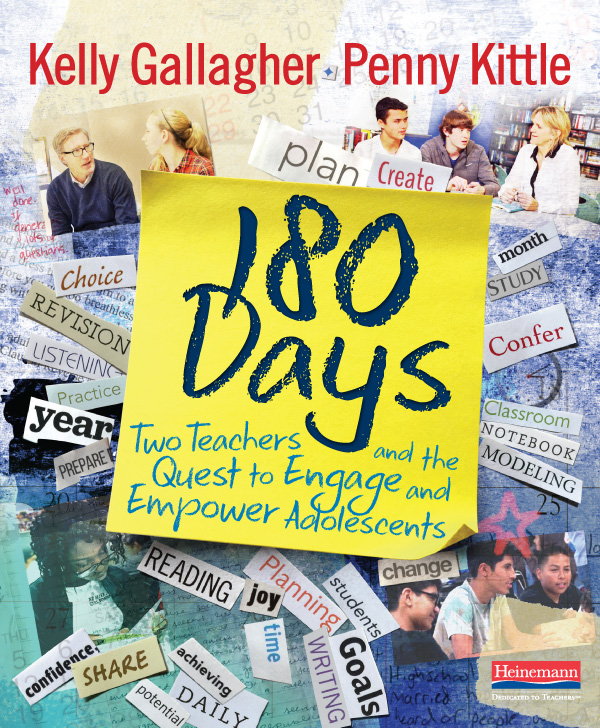
The value of authentic connections is at the core of my teaching philosophy. The further I get in my training, the more concrete this idea has become. Brandon School Division teacher, Tyler Letkeman joined us in #I4Ed to discuss the transformation in his ELA curriculum that was inspired by the book, 180 Days. Tyler’s goal to make the most out of student writing by leveraging technology and authentic audiences.
 |
| Source: https://www.heinemann.com/shared/covers/xl/9780325081137.jpg |
Authenticity. What does that mean, exactly? Let’s dig in a bit. Authentic literacy involves a writer (the creator) and a reader (the audience). Authentic audiences have a HUGE impact on motivation! Can you relate to the difficult tasks of motivating students? The struggle is real. When the only eyes to read their work are the teacher’s, authenticity and motivation are low. But with an authentic audience, learners have a reason to polish their work and to share it with their family/friends, community and people all over the world.
Authentic tasks are foundational to Tyler’s programming. Learners work on four core writing tasks. Just four. Now, think back to your own learning experiences. How many one-and-done tasks did you complete and never look at again? Students are doing a lot of writing, sure, but are they doing a lot of learning? I don’t think so. With just four authentic writing tasks, learners are deeply engaged in the writing cycle - conferencing, reflecting and polishing their work into a piece they’re proud of and ready to publish to the world.
When incorporating authentic audiences into your classroom, consider this hierarchy as presented in my Instructional Methods class with Krista McDivitt. It’s unreasonable to expect every task to fall into the top tier, but try to shift learners to more authentic learning experiences.
5 - Present work in service to the world
4 - Present work to an audience capable of critiquing
3 - Present work for the community
2 - Present work to parents/peers
1 - Present work to the teacher
There are many ways to utilize authentic audiences, especially with the digital tools available at our fingertips. Here’s a few ideas:
- Blogs are easy (and free!) to set up and can be utilized in many ways. Perhaps students each use a blog to reflect on their course work, just like we’re doing for #I4Ed. Maybe you decide to take on a class (or school) blog where learners collaborate to develop content.
- Podcasts are a great platform for students to explore their voice and share ideas. You likely already have the technology available in your school to get recording.
- Launch an online campaign and inspire students to take action and support social issues or world problems they’re passionate about and are relevant today.
- Publish a children’s book or series and integrate cross-curricular connections with art, writing and authentic audiences. Tyler uses www.blurb.com to bring student work to life, publishing a book for each student.
Got some of your own ideas to bring authenticity into the classroom? Comment below and let’s collaborate!
“Education is what remains after one has forgotten everything he learned in school. It is a miracle that curiosity survives formal education. ” – Albert Einstein
Deanne, I agree that we need to make authentic connections in our learning journeys. When I look back at my own primary school journey, I don't remember most of what I learned. Most of my work ended up in the recycling bin. My work would have been in tier one or tier two of the hierarchy you shared about in your post. In my student teaching placements, some of the assignments that I gave students have been in tier three but I don't believe that I have planned activities that fit with tier four or tier five. This class has opened up my mind to the possibilities of platforms such as blogs or podcasts to help engage my students in more authentic learning experiences. In my upcoming teaching placement, I will be in Kindergarten. I am looking forward to finding out about what technology/social media they will be using. At the moment, I can't think of any other specific authentic experiences but if any come to mind, I'll let you know. Thanks for sharing your thoughts Deanne!
ReplyDeleteSuper neat for you to be thinking about how this applies at the Kindergarten level. I think Flipgrid would be such a useful tool with the littles. Who knows what ideas some students might come up with regarding important wordly topics. It's incredible how thoughtful young students can be. Thanks for your thoughts, Alicia!
DeleteDeanne, I appreciate the mention of the authenticity hierarchy. I have never heard of that before and I will look into it further. I also think the point you made about authenticity expanding outside of ELA is a very important concept to remember. Connections need to be made within all subjects to the world outside the school system.
ReplyDeleteHow to get students motivated…that is always the big question. I agree that authenticity does play a large part in helping students become interested in a subject. Just as the teacher should attempt to bring in authentic learning experiences to the classroom, there should also be authenticity in the output. I agree, that students will care less about their work if they see it as simply a piece of paper that will be tossed out at the end of the day. For some students, having that extra audience to view and evaluate their work will create the desire to polish work. However, when I think about bringing in audiences from outside the classroom, I also think about privacy concerns of some students. More reserved individuals may not want their work to be made public, and could experience significant discomfort knowing their school work will be made public. I think that it is important for students to be given options, to allow them to work within their comfort level.
DeleteDaniel, thank you for highlighting those two key factors! Privacy and safety must be considered. I absolutely agree to provide options for students to work at their own pace. I also think encouraging students to step into the "courage" zone is important. Essential life experiences can come from trying new things, getting uncomfortable and pushing through failure.
DeleteYour statement on having trouble motivating students when only the teacher is looking at their work is super accurate. I too agree with what Tyler has implemented in his classroom and believe it's more beneficial for students to be able to look back on what they've written instead of burning it at the end of the year in a bonfire. It gives the students something to look back on to see how much they may have improved and provides them with one more thing to be proud of.
ReplyDeleteMatt, you took me back to the undergrad note-burning party of 2010!
DeleteDeanne, as a music I can tell you how important authentic audiences are for young musicians. Knowing a piece is going to be performed for the student's family and friends definitely creates more motivation to play well, although you will definitely still see struggles to motivate students in the band room! After hearing this talk I have started to brainstorm how one could implement authentic learning in a math classroom. I still haven't found the answer to that, but I'm curious in learning more! Thanks for the read!
ReplyDelete